Mr Justice Treacy's sentencing remarks in the Stephen Lawrence case are now available to view. As students - have a read and see if you can identify aggravating and mitigating factors referred to by the judge.
The BBC also have a good clip here from an interview prior to the sentences being passed in which a barrister explains how the judge will approach matters.
As the offences in question were prior to Schedule 21 of the Criminal Justice Act 2003 on sentencing for murder - the Act does not apply to Dobson and Norris. Accordingly they were sentenced as juveniles, under the law which applied at the time. Whilst some have expressed concerns that this means shorter sentences than they would receive under the modern law, it is in accordance with the rule of law that laws should not have retrospective effect. In other words, if a law is to be applied it should have been in force at the relevant time.
Showing posts with label sentencing. Show all posts
Showing posts with label sentencing. Show all posts
Thursday, 5 January 2012

Friday, 12 February 2010
Can deterrence ever be fair?

The concept of deterrence when it comes to sentencing refers to sentencing someone with the objective of putting that person off crime (individual deterrence) or sending a message to society at large (general deterrence).
There's a thoughtful post on this here in reference to the sentence passed in the case of former Met Police Assistant Commissioner Ali Dizaei (see video clip below for one view on his case).
What do you think? Can deterrent sentencing be justified, or is it unfair and inconsistent to sentence in this way in one case, but not in others?
Views please!
Monday, 7 December 2009
Harpist guilty of handling stolen goods
 Jemima Phillips, official harpist to Prince Charles, was found guilty of handling stolen goods at Gloucester Crown Court today, having already admitted fraud. Apparently the cause of her offending is drug-related.
She has been told that a prison sentence is likely, and was granted Bail until the sentencing hearing. Story on video from the BBC here.
Questions for AS students:
1. Who will have decided her guilt?
2. What grounds for appeal are open to her?
3. Would you have given her bail or not, and why?
4. What do you consider an appropriate sentence to be, and why?
Friday, 20 November 2009
Lord Chief Justice - podcast
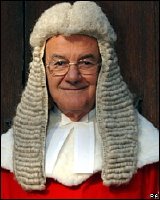 Interesting interview here with the Lord Chief justice - good insight on both sentencing and the civil courts - both relevant topics for A level students!
By the way, his name is Lord Igor Judge - or "Judge Judge" to his colleagues, presumably.
Tuesday, 10 February 2009
Prison staff "to blame" for prisoner's death?

A truly shocking story in The Times today.
A Coroner's Court jury found that a prisoner at Rye Hill Prison in Warwickshire was allowed to hang himself in a prison staff where staff were not being properly trained and were not experienced enough.
This despite the prisoner's mother alerting staff to marks on the prisoner's neck on a previous visit to her son. He had been exhibiting some strange, troubled behaviour before his suicide.
Thinking point: what are the possible consequences of allowing private companies, which exist to make a profit, to run prisons? The prison in this case was run by Group 4 Securicor which has a chequered history in relation to their prisons.
Thinking point 2: is prison the right place for mentally ill convicts? Is prison picking up some of the slack from the closure of many mental health hospitals  over the years? Read a report into suicide in prisons here.
 over the years? Read a report into suicide in prisons here.
This case is also an example of the use of juries in the Coroner's Court.
Inquest, a pressure group, has called for proper treatment for mentally ill inmates.
Sunday, 1 February 2009
Government can fix a prisoner's release date, not the courts!


So says this story from the Times, reporting the case of R (Black) v Secretary of State for Justice (2009). However one of the Law Lords, Lord Phillips (the Lord Chief Justice, no less), disagreed.
Article 5.4 of the European Convention on Human Rights states that a detained person has the right to have the lawfulness of that detention determined by a court.
Despite this the Court ruled that the executive (in the shape of the Secretary of State for Justice, Jack Straw, pictured) can decide the release date of a prisoner if it wants to.
Read the full judgment here.
Two questions:
1. Can this be argued to be contrary to the idea of separation of powers?
2. Might the Secretary of State for Justice take decisions in a politically biased way?
Friday, 23 January 2009
Shannon Matthews' Mum gets 8 years
You can read the judge's sentencing remarks in the case here - a good example of how judges apply the law on sentencing in practice.
Wednesday, 14 January 2009
Don't believe everything you read in the papers!
Law students - a word of advice. Don't take everything you read in the papers as fact.
This article in the Daily Mail is a perfect example. It claims that the judge ruled that a "yob" (interesting term to use for someone found not guilty by the way!) "walked free" from Court as the prosecution's witness was "too believable".
Sounds terrible, eh?
It would be if it were true!
In reality the judge was not prepared to convict someone against whom the only evidence was someone having a glimpse lasting no more than a couple of seconds!
Remember the standard of proof in criminal cases is "beyond reasonable doubt"!
If the ONLY evidence is such a brief glimpse, with nothing else to corroborate it, is there such reasonable doubt?
Of course!
Therefore the judge was clearly correct to direct an acquittal in this case.
The problem for the Daily Mail (and the Metro, which they also own by the way!) is that this doesn't fit in with their "Judges are out of touch and soft" agenda - so they report only the bits they want you to hear!
So be careful not to believe what you read in the papers - they ALL have one bias or another!
This article in the Daily Mail is a perfect example. It claims that the judge ruled that a "yob" (interesting term to use for someone found not guilty by the way!) "walked free" from Court as the prosecution's witness was "too believable".
Sounds terrible, eh?
It would be if it were true!
In reality the judge was not prepared to convict someone against whom the only evidence was someone having a glimpse lasting no more than a couple of seconds!
Remember the standard of proof in criminal cases is "beyond reasonable doubt"!
If the ONLY evidence is such a brief glimpse, with nothing else to corroborate it, is there such reasonable doubt?
Of course!
Therefore the judge was clearly correct to direct an acquittal in this case.
The problem for the Daily Mail (and the Metro, which they also own by the way!) is that this doesn't fit in with their "Judges are out of touch and soft" agenda - so they report only the bits they want you to hear!
So be careful not to believe what you read in the papers - they ALL have one bias or another!
Thursday, 4 December 2008
Neighbour from Hell jailed!
Thanks to Tom Proctor for finding this one for me about a noisy neighbour who was jailed for nine months having pleaded guilty to breaching the injunction on her at Tameside Magistrates' Court.
This is the sort of thing she was doing:
This is what the local housing officer had to say about it:
This is the sort of thing she was doing:
This is what the local housing officer had to say about it:
Sunday, 19 October 2008
Itunes U
 ...is a great source of free law lectures - although make sure you stick to the English ones so as not to get your wires crossed with the USA!
There are lectures here on prisons and trial by jury from the Open University, and one here from Oxford University on contract law. They're a bit advanced for A level so why not challenge yourself!
If you don't have iTunes/can't access these I can put them on a CD for anyone who wants them - alternatively I also have written transcripts of the Open University lectures!
Subscribe to:
Posts (Atom)